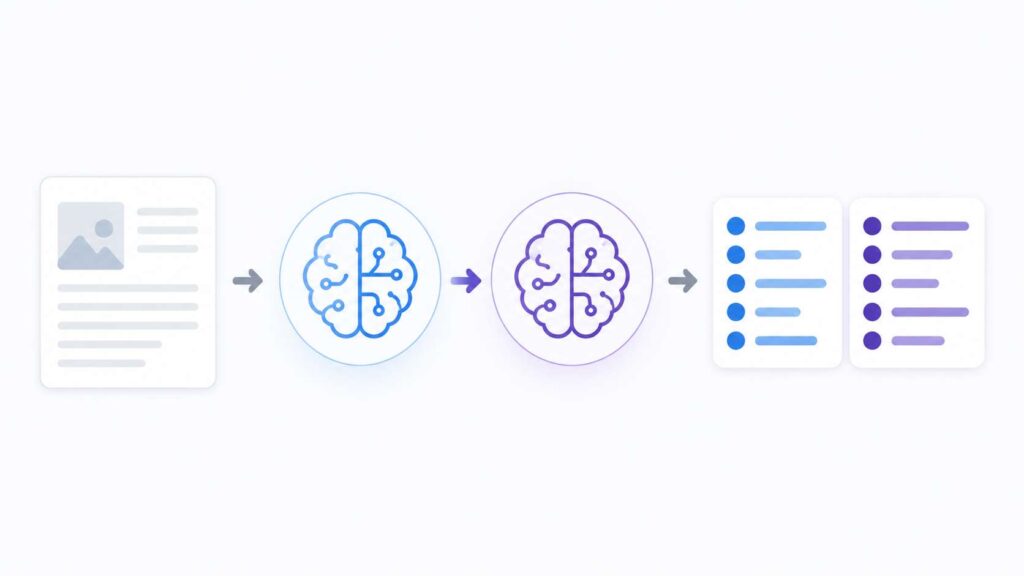
Most citation optimization assumes stability. If you maintain content quality and keep things technically accessible, your citations should persist. That thinking treats the extraction mechanism as static. The May 28, 2026 update to GPT-5.5 Instant shows otherwise. The underlying model can change, and when it does, citation patterns shift independently of anything you did or did not do with your content.
What OpenAI actually changed
On May 28, 2026, OpenAI updated GPT-5.5 Instant in ChatGPT and the API. The official release notes state:
“We’re updating GPT-5.5 Instant in ChatGPT and the API to improve response style and quality. It’s now easier to read, more natural in everyday conversations, and better paced in practical help tasks, with fewer overly long or bullet-heavy responses.”
Source: https://help.openai.com/en/articles/6825453-chatgpt-release-notes
Why this affects citations
The update targets response style: readability, conversational tone, pacing, and format. These are not cosmetic changes. They alter how the model processes and synthesizes information.
If the model now generates “fewer overly long or bullet-heavy responses,” the selection mechanism for source material has changed too. The model may now prefer sources that align with its new output preferences. Content that previously matched the model’s extraction patterns may no longer fit the revised synthesis style.
The “better paced in practical help tasks” part suggests the model now weights content differently depending on the task context. A source that was heavily cited for how-to queries may see reduced citation if the model now looks for different structural patterns when handling practical tasks.
The measurement problem
This creates a real diagnostic challenge. If your citations decline after May 28, 2026, the cause may not be content quality, competitive displacement, or technical accessibility. The cause may be that the model’s extraction logic changed while your content stayed the same.
Standard SEO and GEO tracking does not distinguish between these causes. A drop in citations gets treated as a content or competition problem. Without awareness of model changes, you end up spending resources fixing content that was never broken.
What to do about it
Build model change awareness into your citation tracking. When OpenAI announces model updates, mark the date in your analytics. If citation changes line up with model update dates, investigate whether the shift matches the announced changes before assuming your content is the issue.
For the GPT-5.5 Instant update specifically, the move toward “more natural in everyday conversations” suggests content with a conversational, accessible tone may now be preferred over highly structured or technical content. The reduction in “bullet-heavy responses” suggests content with narrative flow may now do better than list heavy formats.
Look at your most cited content from before May 28. If it relies heavily on bullet points or technical density, test variations with more narrative structure and conversational tone. See if citation rates recover.
The broader pattern
This is not the first model update to affect citations, and it will not be the last. GPT-5.5 Instant itself replaced GPT-5.3 Instant as the default model on May 5, 2026. The May 28 update was a refinement to that model. Each change alters the extraction and synthesis pipeline.
GEO requires continuous monitoring tied to model release cycles, not just one time optimization. Your content can stay exactly the same and still lose citations because the model changed.
Bottom line
Citation patterns shift when the underlying model updates, even if your content has not changed. The May 28, 2026 GPT-5.5 Instant update altered response style preferences, which means altered source selection criteria. Track model updates as a potential cause of citation changes before assuming the problem is your content or your competition.