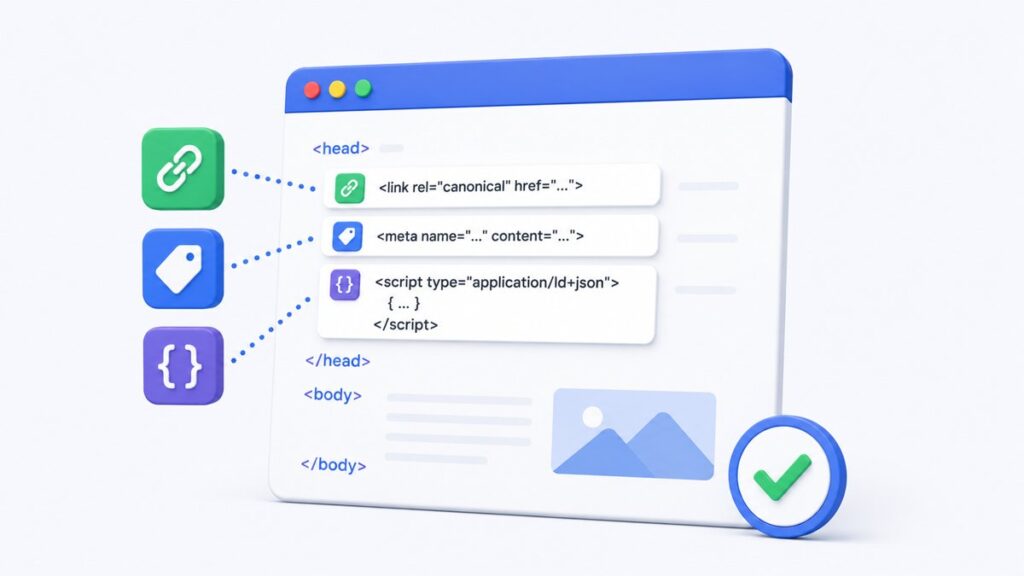
Critical SEO elements must sit early in the HTML document, because Googlebot fetches only the first 2MB of a page.
HTML is read top to bottom. Most developers know this in principle, but the practical implications were spelled out unusually clearly in Google’s 31 March 2026 crawler blog post. Googlebot does not always read the whole file. There is a byte cap, and anything past that cap is invisible.
Google stated the limit directly:
“Googlebot currently fetches up to 2MB for any individual URL (excluding PDFs). This means it crawls only the first 2MB of a resource, including the HTTP header. For PDF files, the limit is 64MB.”
Source: https://developers.google.com/search/blog/2026/03/crawler-blog-post
Two megabytes is generous for most pages. It is not generous for pages that prepend large inline scripts, large inline CSS, base64 images, or megabyte-scale navigation menus before the actual body content.
What happens at the cutoff
Google described the cutoff behaviour explicitly:
“Partial fetching: If your HTML file is larger than 2MB, Googlebot doesn’t reject the page. Instead, it stops the fetch exactly at the 2MB cutoff. Note that the limit includes HTTP request headers.”
Source: https://developers.google.com/search/blog/2026/03/crawler-blog-post
The page is not rejected. It is truncated. Whatever appears after the cutoff is treated as if it does not exist. Google added the consequence in plain terms:
“The unseen bytes: Any bytes that exist after that 2MB threshold are entirely ignored. They aren’t fetched, they aren’t rendered, and they aren’t indexed.”
Source: https://developers.google.com/search/blog/2026/03/crawler-blog-post
If your canonical tag, your title element, or your structured data block ends up below the cutoff, Google has no record of it.
Order matters, officially
Google made the directive explicit in the same post:
“Order matters: Place your most critical elements, like meta tags, <title> elements, <link> elements, canonicals, and essential structured data, higher up in the HTML document. This ensures they are unlikely to be found below the cutoff.”
Source: https://developers.google.com/search/blog/2026/03/crawler-blog-post
This is one of the few times Google has prescribed the position of HTML elements rather than leaving it to developer judgement.
What belongs at the top
Google’s post names meta tags, title, link elements, canonicals, and essential structured data. In practice, five categories of element should appear as early as possible in the head:
- The title element
- The meta description
- The canonical link
- The hreflang link tags, if used
- Essential structured data, specifically Article, Organization, and Breadcrumb schemas in my experience. These carry the highest indexing weight and are the most likely to be missed if pushed below the cutoff.
The first four are explicitly named in Google’s post. The specific schema types are my own prioritisation based on what I see break most often on large sites.
What pushes critical elements down
Three patterns come up again and again when critical elements end up past the 2MB mark.
Inline base64 images embedded directly in the HTML add hundreds of kilobytes per image. They should be external resources.
Large inline CSS or JavaScript blocks at the top of the head add weight before any meta tags appear. Move them to external files, or at minimum place them after the critical head elements.
Server-side rendered navigation is the third. Megabyte-scale menus at the top of the body push structured data and meta tags below the cutoff. The navigation should be there, but not before the elements Google needs to see first.
Bottom line
The 2MB limit is real, the truncation behaviour is documented, and the ordering directive is explicit. Google has noted the limit is not set in stone and may change as the web evolves, but the current cutoff is hard: anything past 2MB is not fetched, not rendered, and not indexed. For sites well under 2MB, none of this matters. For sites that approach or exceed it, the fix is mechanical: move title, meta tags, canonicals, hreflang, and structured data into the first kilobytes of the head, and move heavy inline assets out of the way.